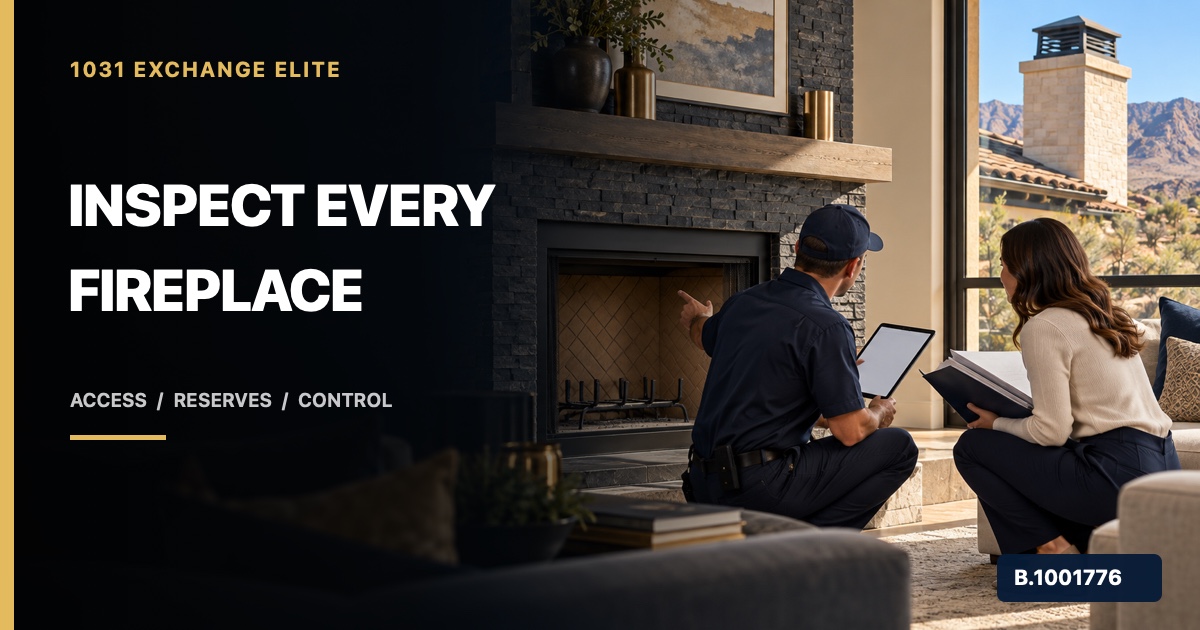
A rental property inspection checklist should treat each fireplace, chimney, flue, vent, fuel source, tenant-use rule, service record, and repair scenario as an operating item—not a lobby feature. The acquisition team should map every system, define lawful access, separate observable condition from concealed or specialist questions, reconcile leases and work orders, and assign post-closing controls. None of that changes the ordinary federal identification or receipt framework; the qualified intermediary, CPA, and attorney should control the exchange file separately.
Inventory every appliance and vent path
List the building, unit, room, appliance type, fuel source, manufacturer, model or label when available, controls, shutoff or disconnect, firebox, hearth, damper or sealed vent, flue or chimney route, cap, roof interface, and current use status. A multifamily asset may combine original masonry fireplaces, later inserts, decorative units, and decommissioned openings with different risks and records.
Control access and inspection scope
Confirm lawful tenant notice, occupied-unit access, roof or attic access, vendor insurance, safety limits, keys, escorts, and deliverables. Preserve which components were observed, operated, camera-scoped, inaccessible, unsafe, or outside the assignment. HUD’s NSPIRE chimney standard can supply useful observable-condition vocabulary for HUD contexts, but it is not a universal private-rental inspection rule.
Reconcile leases, rules, and service history
Collect leases and addenda, house rules, tenant reports, work orders, cleaning and inspection invoices, fuel-provider records, repairs, installation or conversion documents, permits or approvals when applicable, warranties, claims, and incident history. Identify whether use is allowed, restricted, disabled, or ambiguous and who can change that status.
Price operating and capital cases
Model qualified inspection, cleaning, gas or electrical service, masonry or liner work, roof and water-entry repair, access equipment, tenant coordination, vacancy, temporary restrictions, alarms, insurance requirements, permit or engineering questions, reinspection, contingency, and reserves. A scenario is not a contractor bid, coverage decision, or promised return.
Assign post-closing control
Name who maintains the asset register, schedules recurring service, approves vendors, communicates tenant rules, retains reports, responds to odors or alarm events, monitors disabled systems, and closes work orders. If a fireplace will remain unavailable, document the physical and lease-level control rather than relying on an informal instruction.
Keep federal exchange work in its own lane
IRS Form 8824 instructions and Publication 544 address the taxpayer, qualifying property, written identification, receipt, basis, liabilities, related parties, and reporting. Fireplace repairs, reserve planning, tenant access, insurance, and vendor schedules do not create additional exchange time. Coordinate acquisition milestones with the 1031 advisers without treating property operations as tax advice.
FAQ
What fireplace items belong in a rental property inspection checklist?
Inventory every appliance and vent path, inspection scope, access limit, service and cleaning record, lease or rule, tenant report, repair document, alarm dependency, insurance question, reserve case, and post-closing owner.
Does a fireplace problem extend a 1031 exchange deadline?
Do not assume so. Keep the property issue visible while the qualified intermediary, CPA, and attorney control the identification, receipt, taxpayer, title, basis, liability, related-party, and reporting questions.
Can an investor simply prohibit fireplace use after closing?
That is a property-, lease-, safety-, and legal-specific question. Review existing agreements, disclosure, physical controls, notice, local requirements, insurance, and qualified advice before changing use status.
Primary sources and limits
- Nevada Administrative Code Chapter 645D, Inspectors of Structures
- Clark County Fire Department, Cold Weather and Winter Safety
- U.S. Fire Administration, Heating Fire Safety
- HUD, NSPIRE Chimney Standard
- IRS, Instructions for Form 8824
- IRS, Publication 544
General education only. A listing, seller statement, disclosure, photograph, inspection report, service invoice, cleaning record, flame test, repair, permit record, warranty, insurance record, or exchange structure does not by itself establish the appliance type, installation approval, full vent path, concealed condition, safe operation, code compliance, repair quality, future performance, coverage, contract outcome, or investment result. Confirm the exact property, appliance, fuel source, controls, shutoff or disconnect, firebox, hearth, damper or sealed vent, flue or chimney, cap, roof interface, access limits, cleaning and service history, alterations, alarms, manufacturer instructions, applicable restrictions, permits or approvals, qualified follow-up, contract response, reinspection, and first-use or operating closeout with the responsible seller, owner, tenant, HOA, inspector, fireplace or chimney professional, utility or fuel provider, qualified contractor, manufacturer, fire or building authority, title and escrow professionals, lender, insurer, attorney, CPA, and qualified intermediary as appropriate. No individualized legal, tax, contract, engineering, environmental, lending, insurance, privacy, compliance, securities, or investment advice is provided. A CPA, attorney, and qualified intermediary must evaluate the exchange structure, taxpayer, title, deadlines, identification, receipt, basis, liabilities, boot, and reporting.
Related: coordinating the chimney and roof interface, linking alarm readiness to operations, how a 1031 exchange works.