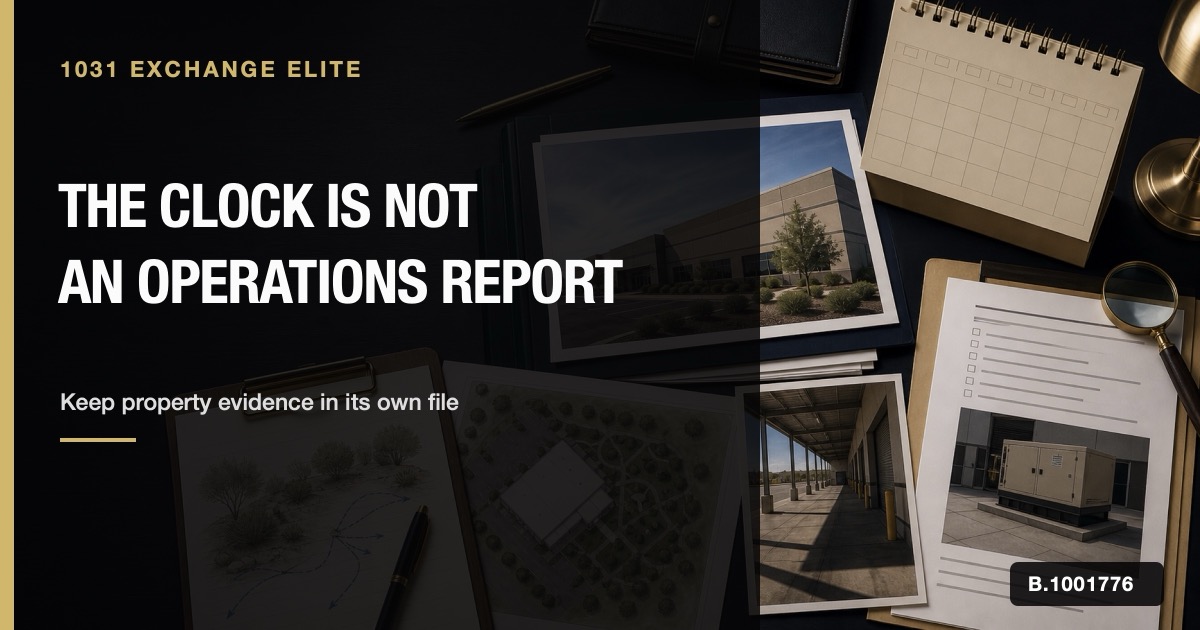
Keep the tax file and operations file separate
IRS Form 8824 instructions say deferred-exchange replacement property generally must be identified in writing within 45 days and received by the earlier of 180 days or the federal return due date, including extensions. The taxpayer, CPA, attorney, and qualified intermediary own qualification, identification language, deadlines, basis, boot, and reporting. A broker's property work does not replace that advice.
The operations file asks a different question: what would have to function, be maintained, or be funded after closing?
Landscape and water controls
Confirm provider, assigned days, metering, irrigation zones, controller access, leak history, maintenance responsibility, association or tenant allocations, and any landscape-conversion plans. Use current bills and service records where available. Do not turn the regional schedule into an expense estimate.
Access and tenant use
Test vehicle, delivery, tenant, vendor, and emergency access at relevant times. Review gates, loading areas, lighting, shaded waiting or work areas, easements, and alternate routes. Lease language, title matters, zoning, and code questions require the appropriate professional review.
Utilities and continuity
Record which systems depend on power, water, communications, or vendor access. Ask about backup power, gate release, critical equipment, tenant notice procedures, and who responds when the normal route fails. Clark County's preparedness guidance is a planning prompt, not an engineering or insurance conclusion.
Example: one identified property, one incomplete operations file
An exchanger identifies a small commercial building within the professional team's timeline. The property file still lacks irrigation service history, the lease allocation for landscape care, a confirmed gate-outage procedure, and a current utility record. Timely identification does not convert those unknowns into acceptable operating facts.
FAQ
Does the watering schedule tell me future operating cost?
No. It establishes a current seasonal rule. Cost and performance require address-specific bills, equipment condition, use, rates, contracts, and professional review.
Can operations diligence wait until after identification?
The professional team should set the sequence. Identification timing and property diligence are distinct; do not assume the tax clock extends inspection, financing, title, lease, or operational contingencies.
Who decides whether the exchange qualifies?
The taxpayer should work with a qualified intermediary, CPA, and attorney. The broker can organize real-estate facts and transaction questions but should not give individualized tax or legal advice.
Primary sources and limits
- Southern Nevada Water Authority 2026 Water Resource Plan
- Las Vegas Valley Water District conservation rules
- Clark County emergency planning
- IRS Instructions for Form 8824
Southern Nevada Water Authority 2026 Water Resource Plan; Las Vegas Valley Water District conservation rules; Clark County emergency-planning guidance; IRS Instructions for Form 8824. Educational only. No exchange qualification, tax result, operating cost, income, appreciation, insurance outcome, or investment return is promised.
Open an operations-diligence file beside the exchange file.
Use the address-specific facts and the right professionals before deciding.
Schedule a conversationHow 1031 works · Las Vegas market · All insights
Buying rental property near an airport during a 1031 exchange