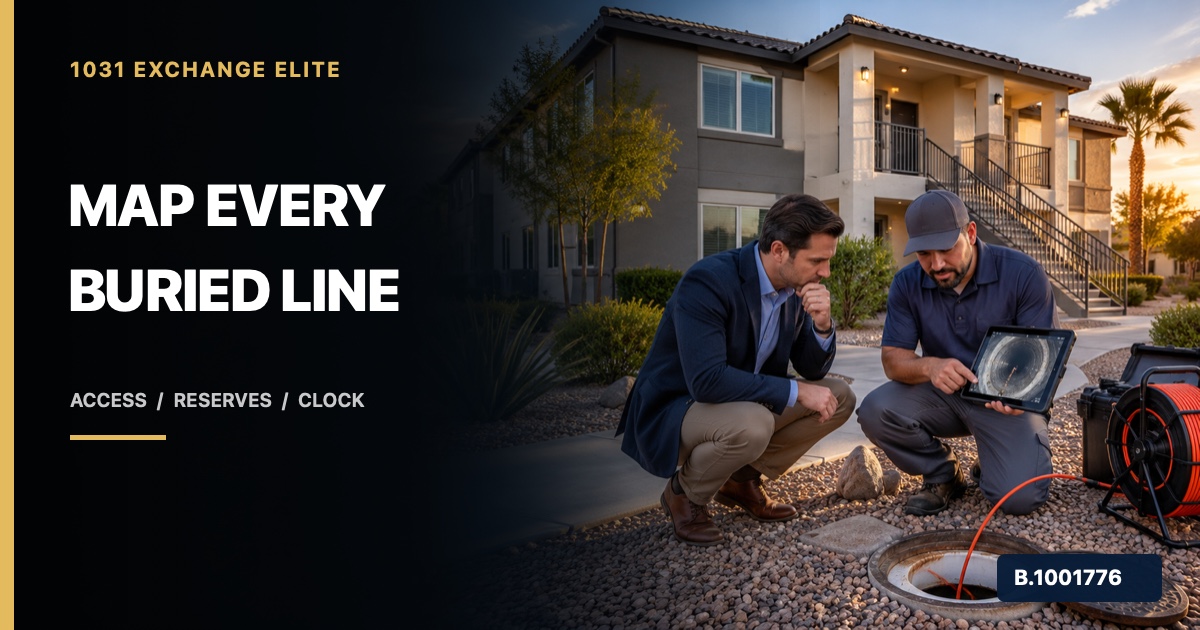
A sewer scope inspection for rental property should connect the camera evidence to the asset map, line ownership, leases, tenant access, backup history, prior work, repair scenarios, insurance, lender questions, reserves, and post-closing operating control. It does not establish Section 1031 eligibility or extend the federal identification or receipt periods. The property team should resolve buried-line questions while the qualified intermediary, CPA, and attorney separately control the exchange file.
Map every building, branch, lateral, and responsible party
Identify each building, unit stack, cleanout, private lateral, shared line, public connection, easement, and common-area segment. Reconcile the physical map with utility records, title and survey materials, association documents, leases, property-management agreements, and seller representations. One clear camera run from one access point does not prove the condition of every branch or building.
Control tenant access and inspection scope
Confirm lawful notice, access authority, occupied-unit constraints, cleanout access, safety, vendor insurance, and who receives the video and report. Define the intended distance, line segment, deliverables, and what happens if the camera cannot advance. A stopped or partial scope is an underwriting fact, not permission to assume the unseen section is normal.
Reconcile service history with current evidence
Collect backup logs, tenant complaints, work orders, cleaning invoices, prior videos, repair records, permits or approvals when applicable, contractor identity, warranties, and insurance claims. Date every item and match it to the correct building and line segment. Separate a recurring clearing service from a documented structural repair.
Price operating and capital scenarios
Model qualified follow-up, clearing, excavation access, pavement or landscape restoration, tenant coordination, downtime, temporary service, permits, engineering where needed, repair or replacement, reinspection, contingency, and reserve funding. Confirm who can authorize emergency and capital work after closing. Do not present a scenario as a bid or guaranteed outcome.
Keep the exchange file separate and visible
IRS instructions keep the deferred-exchange file focused on qualifying real property, the taxpayer, written identification, receipt, basis, liabilities, related-party rules, and reporting. Sewer inspection, vendor availability, repairs, lending, insurance, and tenant logistics do not create extra time under the ordinary 45-day identification and 180-day receipt framework. Coordinate the calendars without merging professional roles.
Example: one backup, two buildings, one cleanout
An exchanger reviews a duplex pair with a recent backup invoice and only one visible cleanout. The team maps the buildings and likely branches, confirms lawful access, preserves the first scope and its stopping point, obtains qualified repair scenarios, reconciles leases and management responsibility, and prices reserve cases. The QI and tax advisers continue to manage the exchange timing independently.
FAQ
What belongs in a rental-property sewer-scope checklist?
Include the building and line map, cleanouts, access authority, scope provider, video, distance, segments observed, limitations, backup and repair history, leases, work orders, contractors, permits or approvals, warranties, claims, estimates, reserves, and operating owner.
Can sewer repairs extend a 1031 exchange deadline?
Do not assume so. Coordinate property diligence and repair decisions with acquisition milestones while the qualified intermediary, CPA, and attorney control the federal identification, receipt, taxpayer, title, basis, liability, and reporting questions.
Should an investor rely on the seller’s old sewer video?
Use it as one dated evidence source. Confirm the property and segment, access point, distance, provider, findings, later backups or repairs, and whether a current qualified review is needed for the acquisition decision.
Primary sources and limits
- Clark County Water Reclamation District, Report a Sewer Problem
- Clark County Water Reclamation District, Definition of Lateral
- City of Las Vegas, Sewer Back Up Issues
- Nevada State Contractors Board, License Search
- IRS, Instructions for Form 8824
- IRS, Publication 544
General education only. A listing, seller statement, disclosure, invoice, service call, cleanout, camera run, video, report, utility mark, permit record, warranty, contractor proposal, insurance record, or exchange structure does not by itself establish the full line route, ownership, condition, capacity, code compliance, repair quality, future performance, cost, coverage, lender acceptance, or investment result. Confirm the exact property, wastewater provider, private lateral, connection, easement, cleanouts, access, line segments, scope distance, limitations, backup history, repairs, shared facilities, association terms, permits or approvals, contractor licensing, estimates, contract response, reinspection, and closeout evidence with the responsible utility, seller, owner, tenant, HOA, inspector, qualified plumber or contractor, title and escrow professionals, lender, insurer, attorney, CPA, and qualified intermediary as appropriate. No individualized legal, tax, contract, engineering, environmental, lending, insurance, privacy, compliance, securities, or investment advice is provided. A CPA, attorney, and qualified intermediary must evaluate the exchange structure, taxpayer, title, deadlines, identification, receipt, basis, liabilities, boot, and reporting.
Related: separating municipal-sewer and septic diligence, coordinating another hidden capital decision, how a 1031 exchange works.