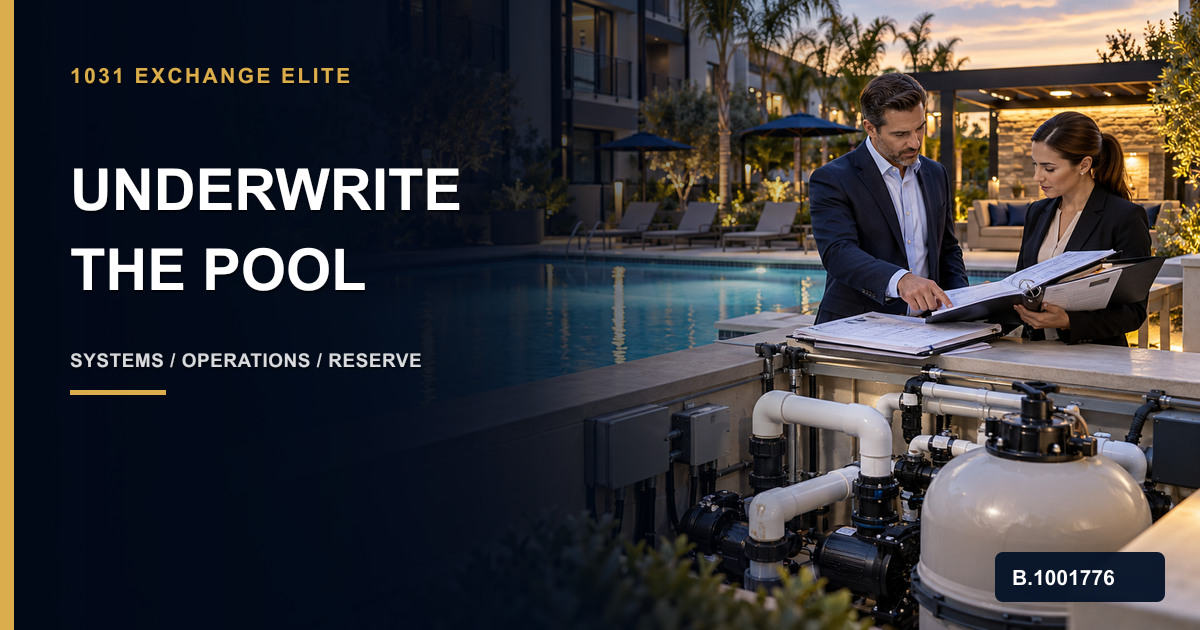
A pool inspection checklist for a rental property should connect physical condition, safety controls, jurisdiction records, tenant and guest access, vendor responsibility, insurance, operating cost, capital reserves, and written closeout. It should remain separate from the federal 1031 exchange file. The pool does not change who must control taxpayer, title, qualified-intermediary, identification, receipt, basis, liability, and reporting questions.
Map every pool-related asset and record
Inventory pools, spas, decks, barriers, gates, doors, windows, alarms, covers, pumps, filters, heaters, sanitation, automation, lighting, drains, water features, service rooms, and posted rules. Match them to permits, final approvals, plans, warranties, invoices, and service history.
Define inspection scope across buildings and systems
Record who inspected structure, circulation, plumbing, electrical, gas, heating, decks, drainage, barriers, controls, and safety features; what was operated; what was inaccessible; and which follow-up or destructive testing was excluded. Scope gaps belong in the diligence log.
Assign operating and safety ownership
Identify the owner, manager, association, tenant, vendor, maintenance staff, and emergency contacts. Reconcile leases, management agreements, association documents, access rules, supervision limits, service schedules, logs, incident reporting, and after-hours response.
Underwrite current and capital costs
Model utilities, chemicals, cleaning, testing, filter service, equipment replacement, leak and surface work, heating, barriers, alarms, covers, insurance, permits, downtime, access coordination, and reserve cases. Use property evidence and qualified estimates rather than a generic per-pool assumption.
Reconcile insurance and vendor boundaries
Confirm the insurer and lender know the property configuration and intended use. Verify contractor or inspector credentials appropriate to the work, service agreement scope, indemnity or insurance documents, renewal and termination terms, and who can authorize work or communicate with occupants.
Protect the exchange calendar
A pool inspection, repair estimate, permit search, vendor negotiation, coverage question, or capital-project decision does not automatically extend federal identification or receipt deadlines. Escalate asset issues early while the QI, CPA, and attorney control exchange structure and tax questions.
FAQ
Should a rental-property pool have a separate inspection?
It may be prudent when the general inspection scope does not cover all pool systems or operating risks. Define the requested systems, credentials, report, testing conditions, and deadline before ordering the work.
What pool records matter for a rental property?
Permits, final approvals, plans, equipment and warranty records, maintenance logs, water-quality or service records where applicable, repairs, incidents, insurance correspondence, vendor contracts, leases, association rules, and current operating procedures can all matter.
Does a pool affect 1031 exchange eligibility?
Do not use the pool as an exchange qualification test. The taxpayer’s use, transaction structure, title, deadlines, identification, receipt, basis, liabilities, and reporting require review by the CPA, attorney, and qualified intermediary.
Primary sources and limits
- Clark County Building & Fire Prevention, Current Codes and Local Amendments
- Clark County, 2024 International Swimming Pool and Spa Code Southern Nevada Amendments
- Nevada Legislature, NAC Chapter 645D — Inspectors of Structures
- IRS, Instructions for Form 8824
General education only. A pool, spa, clear-water appearance, listing description, disclosure, permit record, inspection, service log, repair estimate, code excerpt, warranty, contractor visit, or article does not establish condition, safety, code compliance, approval, future performance, insurance coverage, legal rights, tax treatment, or investment suitability. Verify the exact jurisdiction, current code application, permits and final approvals, inspection agreement and scope, professional credentials, system condition, barriers and access controls, service history, repair needs, insurance, financing, contract dates, operating responsibility, and professional roles with the responsible building department, licensee, inspector, qualified pool professional, contractor, engineer, insurer, lender, attorney, CPA, qualified intermediary, title or escrow company, and other qualified professionals as appropriate. No individualized legal, tax, lending, insurance, securities, compliance, contract, property-management, or investment advice is provided. A CPA, attorney, and qualified intermediary must evaluate the taxpayer, investment-use position, exchange structure, acquiring party, title, deadlines, identification, receipt, basis, liabilities, boot, reporting, and vendor documents.
Related: separating service contracts from pool condition, defining asset inspection and reserve questions, start an exchange-property conversation.