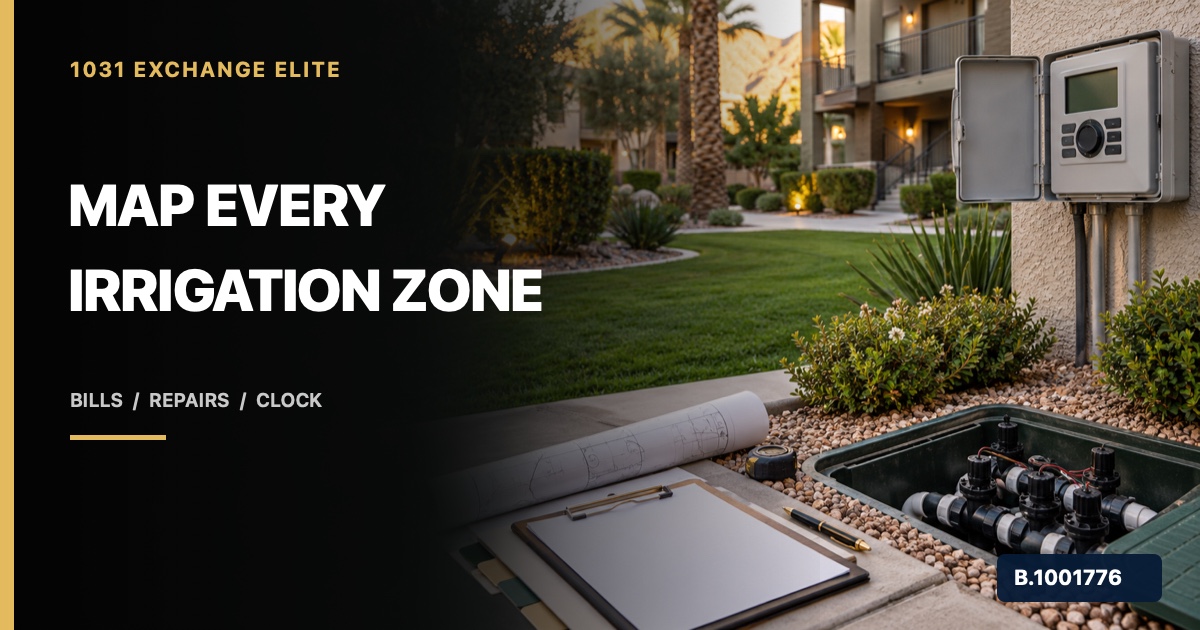
An irrigation system inspection checklist should connect the physical system to water-provider rules, landscape obligations, vendor scope, tenant or common-area access, bills, work orders, and capital reserves. It does not establish Section 1031 eligibility or extend the federal exchange deadlines. Inspect every zone, reconcile the records, price unresolved work, and keep those property decisions visible beside—but separate from—the CPA, attorney, and qualified intermediary’s exchange file.
Create an asset and responsibility map
List each meter, controller, program, shutoff, backflow component, valve box, zone, sprinkler line, drip line, filter, landscaped area, and responsible party. Reconcile leases, HOA documents, landscape contracts, utility accounts, seller schedules, site plans, and actual practice. A vendor invoice without a complete zone map leaves coverage gaps.
Test condition and water control
Run zones under appropriate supervision and document heads that fail to rise, damaged emitters, leaking joints, stuck valves, pooling, runoff, overspray, dry areas, pressure symptoms, and controller errors. Compare results with recent water bills and work orders without treating a lower bill as proof that every zone works.
Verify the provider and seasonal program
For a Southern Nevada asset, use the official address tool to identify the provider, watering group, and assigned days. Check every controller program, clock, seasonal adjustment, start time, rain or weather feature, and separate drip schedule. Price the labor and controls needed to keep settings current after acquisition.
Underwrite repairs and operating ownership
Model immediate repairs, buried-line investigation, controller replacement, valve and emitter work, backflow review, drainage or building-envelope review, landscape recovery, water-waste response, vendor transition, staff training, and record cleanup. Assign the person who will inspect, authorize, document, and close each work order.
Protect the exchange calendar
IRS guidance keeps the federal file focused on qualifying real property, taxpayer and title, written identification, receipt, basis, liabilities, related parties, and reporting. Irrigation inspections, bids, utility records, repairs, lender conditions, and vendor onboarding do not create extra time under the usual 45-day identification and 180-day receipt limits.
Example: the seller supplies one controller photo
The buyer matches the photo to the onsite controller, runs and labels every accessible zone, reconciles the provider schedule and bills, samples work orders, prices inaccessible or failed areas, and assigns post-closing control. The photo proves one device existed when photographed; it does not establish system condition or operating cost.
FAQ
What belongs in an irrigation system inspection checklist?
Include meters, controllers, programs, shutoffs, valves, backflow components, zones, heads, drip lines, filters, test results, leaks, overspray, pooling, bills, work orders, vendor scope, schedules, repair owners, and closeout evidence.
Should a 1031 buyer rely on the seller’s landscape contract?
Use it as one evidence source. Confirm the actual property, covered areas, exclusions, service frequency, open work, cancellation or assignment terms, and whether practice matches the contract.
Can irrigation repairs extend a 1031 deadline?
Do not assume so. Coordinate property diligence and repairs with the acquisition calendar while the qualified intermediary, CPA, and attorney handle identification, receipt, taxpayer, title, and reporting requirements.
Primary sources and limits
- Southern Nevada Water Authority, Change Your Irrigation Clock
- Southern Nevada Water Authority, Find Your Watering Group and Provider
- U.S. EPA WaterSense, Sprinkler Spruce-Up
- U.S. EPA WaterSense, Find It Flag It Fix It Checklist
- IRS, Instructions for Form 8824
- IRS, Publication 544
General education only. A listing, seller statement, photograph, controller display, short zone test, water bill, inspection note, maintenance record, service invoice, provider lookup, or exchange structure does not by itself establish full system condition, complete coverage, water efficiency, drainage performance, code or utility compliance, future cost, insurability, lender acceptance, or investment performance. Confirm the exact address, provider, current rules, property type, controller, meter, shutoff, backflow components, valves, zones, lines, emitters, filters, landscape needs, test scope, access, repairs, and documentation with the seller, owner, tenant, HOA, water provider, inspector, qualified irrigation, plumbing, backflow, landscape, drainage, or building professional, lender, insurer, attorney, CPA, and qualified intermediary as appropriate. No individualized legal, tax, contract, water-rule, engineering, lending, insurance, privacy, compliance, securities, or investment advice is provided. A CPA, attorney, and qualified intermediary must evaluate the exchange structure, taxpayer, title, deadlines, identification, receipt, basis, liabilities, boot, and reporting.
Related: reviewing a water-related operating issue, separating property systems from exchange timing, how a 1031 exchange works.