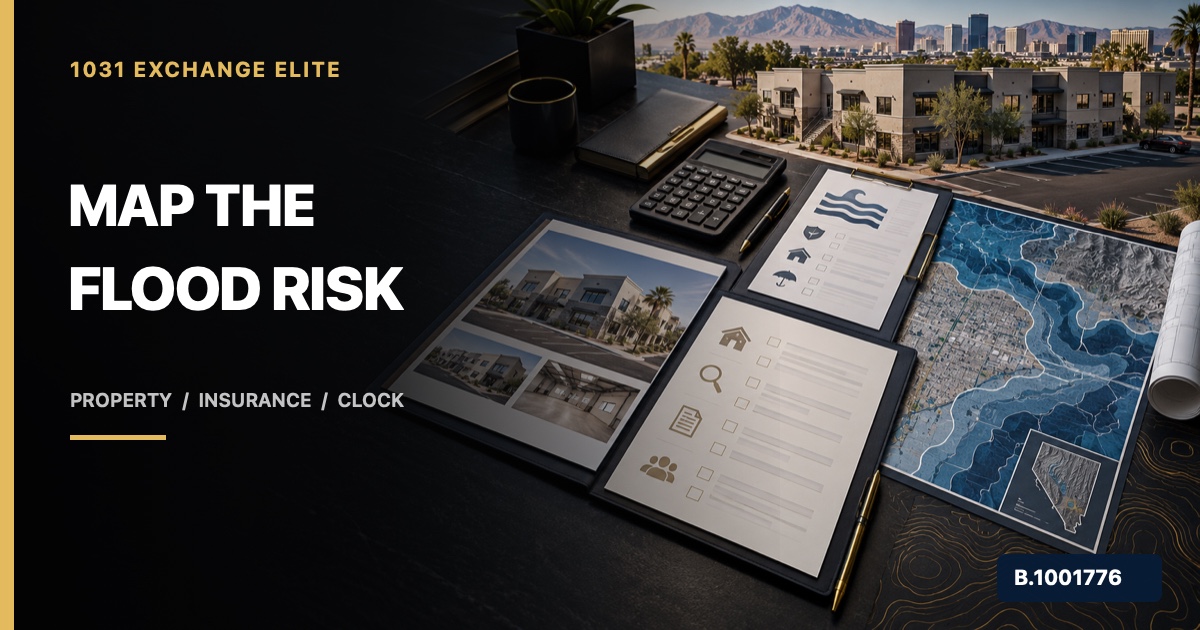
Flood risk for a 1031 replacement property belongs in property due diligence, not in the definition of whether real property is like kind. Check the official map, building location, financing and insurance requirements, operating history, and local floodplain constraints while the qualified intermediary, CPA, and attorney protect the separate identification, receipt, taxpayer, vesting, basis, liability, and reporting questions.
Create a property-specific flood file
Save the effective FEMA panel, zone, date, building position, any Letter of Map Change, local jurisdiction, lender determination, insurance quote, elevation or survey information when relevant, and open technical questions. A portfolio assumption or neighboring parcel is not a substitute for the identified asset.
Underwrite the operating consequences
Ask how coverage terms, deductibles, drainage maintenance, access, tenant communication, capital work, lender reserves, and local floodplain rules affect the actual operating plan. Do not turn a map category into an unsupported rent, vacancy, value, or return forecast.
Keep the exchange clock visible and separate
IRS Form 8824 instructions state that deferred replacement property generally must be identified within 45 days and received within 180 days or the return due date, whichever is earlier. Flood, insurance, survey, and financing review do not automatically extend those federal deadlines.
Example: the identified parcel crosses two zones
An exchanger identifies a small multifamily asset whose parcel shows two mapped zones. The team locates the buildings, requests the lender determination and insurance quote, routes a boundary question to the local official or surveyor, and keeps the QI and tax advisers informed. No one treats the extra diligence as an extension of the exchange deadline.
FAQ
Does a flood zone prevent property from qualifying for a 1031 exchange?
Not by itself. Federal like-kind qualification and property-specific flood, insurance, financing, and operational risk are separate analyses for the QI, CPA, attorney, lender, insurer, and technical professionals.
Does flood due diligence extend the 45-day identification period?
Do not assume so. IRS instructions provide the federal deadline framework; ask the CPA, attorney, and QI about the exact exchange.
Who should review a close flood-map boundary?
Use the local floodplain administrator and, as appropriate, a qualified surveyor or engineer. The lender and insurer must separately confirm their determination and terms.
Primary sources and limits
- FEMA, What Is My Flood Zone?
- FEMA, Flood Map Service Center
- FEMA, National Flood Insurance Program Eligibility
- Clark County, OpenWeb Property and Flood-Zone Map
- Nevada Division of Insurance, Flood Insurance
- Internal Revenue Service, Instructions for Form 8824
- Internal Revenue Service, Publication 544
General education only. A map, zone label, parcel overlay, listing field, lender note, insurance estimate, survey, or exchange structure does not by itself establish current flood risk, building location, coverage, premium, financing requirement, local compliance, property condition, value, or tax outcome. Confirm the exact address, effective map and panel, map date, building location, map-change documents, local jurisdiction, lender determination, insurance terms, inspection or survey needs, deadlines, and operating implications with FEMA, the responsible local office, lender, insurer, surveyor, engineer, attorney, CPA, and qualified intermediary as appropriate. No individualized legal, tax, lending, securities, insurance, privacy, compliance, or investment advice is provided. A CPA, attorney, and qualified intermediary must evaluate the exchange structure, deadlines, identification, receipt, basis, boot, and reporting.
Related: airport diligence for replacement property, property-tax and exchange ledgers, how a 1031 exchange works.