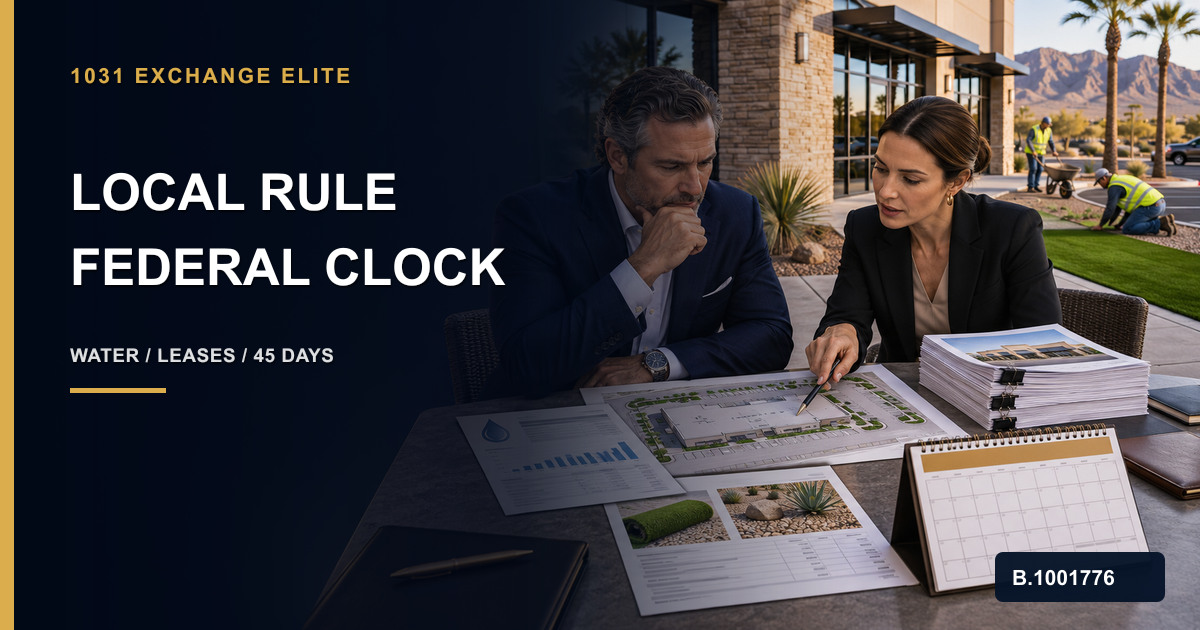
A 1031 exchange commercial property due diligence checklist should test both exchange qualification and the property that will operate after closing. In Southern Nevada, the January 1, 2027 nonfunctional-turf law adds a timely question: can covered grass continue to receive the property's Colorado River water, and who owns any conversion, waiver, extension, or operating response? That issue does not change the IRS clock. The 2026 Form 8824 instructions still require written identification within 45 days and receipt by the earlier of 180 days or the tax-return due date with extensions.
Keep the exchange file and property file connected but separate
The qualified intermediary, CPA, and attorney should confirm the taxpayer, relinquished and replacement property, held-for-investment or business use, identification, receipt, related-party issues, title, and reporting. Property diligence separately covers leases, income and expenses, physical condition, zoning and use, environmental work, insurance, financing, management, capital needs, vendors, utilities, and local compliance. A qualifying exchange can still acquire a weak operating asset.
Add a water-and-landscape schedule
Identify the parcel use, provider, meters, irrigation accounts, turf locations and measurements, current functional or nonfunctional classification, notices, waiver or extension record, rebate application, conversion contract, tree and irrigation plan, completion evidence, and ongoing watering rules. Confirm which facts come from the owner, provider, association, contractor, tenant, or public source and the date each was checked.
Read leases and operating documents for responsibility
Determine whether the owner, tenant, property manager, master association, subassociation, or another party controls landscaping and pays water, repairs, conversion, assessments, or penalties. Review expense stops, common-area maintenance, capital provisions, notices, estoppels, service contracts, reserve assumptions, and the seller's written representations with the appropriate professionals. Do not assume a net lease transfers every future cost.
Underwrite more than one current-rule outcome
Model the accepted conversion contract, a pending classification or waiver, a provider-required revision, and an unresolved item that survives closing. Use actual bids and written agency records when available. Keep proposed LVVWD service-rule fees labeled proposed until adopted, and do not treat a reported grace period or lawsuit as a property-specific approval. Record who will refresh the rule and when.
Protect the 45- and 180-day decisions
The IRS timetable can pressure investors into collapsing property questions into one yes-or-no decision. Set property deal breakers before identification, maintain qualified backup paths, give the QI clear written instructions, and schedule professional reviews early enough to act. A water-provider response, contractor delay, waiver request, or landscape project does not automatically extend the federal exchange period.
FAQ
Does the 2027 turf rule affect a 1031 exchange?
It can affect the operating diligence and cost allocation for a covered Southern Nevada replacement property. It does not replace or extend the federal identification and receipt requirements.
Should nonfunctional-turf work be completed before closing?
That is a transaction-specific legal, operational, financing, and contract decision. Confirm current agency status, scope, responsible party, bids, funding, completion evidence, and any surviving obligations in writing.
Can a pending waiver extend a 1031 deadline?
Do not assume so. The IRS deadline is separate from a local waiver or conversion process. Coordinate timing with the qualified intermediary, CPA, attorney, provider, lender, and transaction team.
Primary sources and limits
- Nevada Legislature, AB 356 / Chapter 364
- Southern Nevada Water Authority, laws and ordinances
- Southern Nevada Water Authority, nonfunctional-turf waiver
- IRS, 2026 Instructions for Form 8824
- IRS, like-kind exchange real-estate tax tips
General education only. A lawn, map, listing, notice, headline, proposed rule, agency page, waiver request, conversion contract, rebate, referral, or exchange schedule does not establish one property’s classification, compliance, exemption, extension, cost, value, tax treatment, exchange qualification, license status, professional acceptance, or future result. Verify the current property use, zoning, water source and provider, meter and account, turf location and use, agency classification, notices, service rules, waiver or extension, conversion scope, tree and irrigation plan, contractor license and bids, leases, association records, title, financing, insurance, taxpayer, qualified intermediary, exchange structure and dates, receiving professional, client consent, responsible people, and completion evidence with the appropriate real-estate professionals, water agency, association, contractor, engineer, qualified intermediary, CPA, attorney, tax adviser, lender, insurer, title and escrow professionals, and other qualified professionals. No individualized legal, tax, lending, insurance, securities, engineering, water-law, landscape, appraisal, property-management, fair-housing, or investment advice is provided. A CPA, attorney, and qualified intermediary must evaluate the taxpayer, investment-use position, exchange structure, acquiring party, title, deadlines, identification, receipt, basis, liabilities, boot, reporting, and vendor documents.
Related: checking replacement-property title and records, underwriting Las Vegas property operations, contact 1031 Exchange Elite.